Sunday, June 07, 2009


BLACK AND BLUE

An evening of original jazz and blues covers with special guest, the late ee cummings

Lo Galluccio (vocals)
Eric Zinman (piano) At the Outpost, 186 1/2 Hampshire St.
Friday, June 26th at 8 pm
$10 contribution suggested

Sunday, January 04, 2009


Mike Amado street-wise shaman of the spoken word and friend has passed on. Memorial on Monday, January 5, 2008 at Out of the Blue Gallery 106 Prospect St.

Mike, you are loved.

Saturday, November 01, 2008

Halloween


Coleen T. Houlihan and I went to Salem for Halloween last night, where over 100,000 gathered to storm the streets as bees, and witches, Plumber Joes, and Jokers. There were men in drag and divine 50's Satin dolls. Coleen and I braved one sure to make you sick ride and then ate a caramel apple and had a class glass of wine at Captain's restaurant on the wharf.

Tuesday, September 16, 2008

Sarasota VII soon to be released!


Cervena Barva Press announces the release of Lo Galluccio's Sarasota VII, a prose-poem of 65 pages

that was inspired by the works of Paul Auster, Margurite Duras and Elizabeth Strand. In two parts, this

experimental work of passionate memoir explores how death and place and desire intersect in a studio in

Florida overlooking the Atlantic ocean. Part 1 explores one lover's loss of his sister Teres, from "evil winning

in the motives of a handful of boys." The voracious pull of black holes and the pure ice water of Saturn intermittantly

tug at the book, as a deconstructed symphony. In the 2nd part, Galluccio writes of her own father's fade out and

her resolve to become whole.


ADVANCE PRAISE:


So this is what Anne Boleyn whispered to the men who took her head—both her husband and her executioner—so this is what the henchman replied; for nowhere has sinner and saint been so exquisitely linked than in Lo Galluccio's Sarasota VII. As the curtain parts, it is not polar opposites that are revealed but a single conjoined child. Traversing Sarasota VII (it has less in common with reading, more so the navigation to heaven or the surrender into hell) is like giving definition to the word 'passion.' This is how to say profoundly simple words with often incomprehensible meanings: Love. Desire. Hate. Birth. Destruction. And who hasn't attempted this— to grasp the single rose in the pit of thorns. And who hasn't, on occasion, failed and been banished? But Lo's beautiful, prophetic prose lulls us, even as we burn, and she tells us to "Fossilize the monster" and "Tend our rings like vain kings." She is right. We must. For something so terrifyingly beautiful should, forever, be.

Coleen T. Houlihan, novelist and poet, "the Human Heart."


Saturn in astrology is often called the planet of discipline, limitations, karma, and boundaries. Lo Galluccio explores these aspects of the human condition in Sarasota VII,, noting: "with every death we're given an opportunity to expand or to contract." Her finely drawn study contains great depth, revealing both simple and complex souls whose crashing hearts echo the breaking waves of the Atlantic; swelling and shrinking, drying and drowning, dying while they still go on living. Like Saturn, these people have had something crash through them, only to create a ring of debris they carry to balance their skewed axis. As in the heavens, there is much beauty and much destruction, where even light cannot escape black holes, and "nothing's pure and nothing's stable." Galluccio takes the reader on a journey from a hotel room in Florida into the expansive cosmos of the soul, revealing a woman caught up between passion and intellect, raging to be free while seeking to merge; loving, losing, dominating and submitting in her evolution to reconnect and be whole.

Karen Bowles, Luciole Press

The first public reading of "Sarasota VII" will take place September 29th at Stone Soup at the Out of the Blue Gallery on Prospect St. in Cambridge. Then on October 19th, Lo will perform with electric guitarist Ivan Korn, adding an improvised score to selections from the work and songs at the Witch City Cafe in Salem, MA.

Saturday, July 19, 2008

Hot off the Presses, Stunted Inner Child Shot the TV by Mike Amado

Stunted Inner-child Shot the TV by Mike Amado
Červená Barva Press, 2008

"Crossing the intersections between media, militarization, and post-9/11 consciousness, Amado's Stunted Inner-child Shot the TV, gives us a view of the complicated relationship between society and self, consumerism and identity."
-Edward J. Carvalho (Doctoral Candidate, Indiana University of Pennsylvania and author of solitary, poor, nasty, brutish and short)

"Take Mike Amado's red Morpheus pill and follow him down the rabbit hole of America's mad matrix of warped dreams, tabloid icons, chrome-eyed military men and infopreachers....His writing is elastic, vivid and wise. With a heart for an undetermined and undetermining God, Amado's revolution cannot be downloaded. It's amazing any of us make it out alive."
-Lo Galluccio

The Song


When I look out my window,
Many sights to see.
And when I look in my window,
So many different people to be
That it's strange, so strange.
You've got to pick up every stitch,
Mm, must be the season of the witch,
Must be the season of the witch, yeah,
Must be the season of the witch.

When I look over my shoulder,
What do you think I see ?
Some other cat looking over
His shoulder at me
And he's strange, sure he's strange.
You've got to pick up every stitch,
Beatniks are out to make it rich,
Oh no, must be the season of the witch,
Must be the season of the witch, yeah,
Must be the season of the witch.

Saturday, June 21, 2008

New Review of Hot Rain by Ralph-Michael Chiaia


When I was a teenager, a friend of mine once said that people never talk as intimately as when they are cleaning out their ears with a q-tip. I have learned over the years that, although an adolescent made this comment, there is quite some truth in it. Hot Rain is a witty, fast-paced collection of poems that focuses on language, memories, and sound. The author is like a q-tip, and Galluccio’s going to get the wax out. Lo Galluccio, a lyricist and poet, flows between the spiritual path of abstractions into the concrete world of images that she drums up like a percussion soloist. You can hear the beat she establishes pumping through your veins. Then, when she has you in sync she craftily starts to augment and diminish, to run around in circles that examine the very act of speaking, thinking, and loving. In this way, these poems are able to make you anticipate a certain word based on the rhythm and then change course on you and surprise you with a new word, new sound, and new image—a new thought. This is the delightful gift of Lo Galluccio. She knows you’re there and she knows who she’s talking to, yet she’s decided to clean out your ears until you hear her unique, mystical incantations. She takes your hand and leaps into a transcendental world, but don’t think it’s all abstract and flimsy. The images are hard and real and the language is a code Gallucio has studied. Take a look at “1. The Come On” where Galluccio masterfully employs hard, crisp language:

Make me act.
Buy the red dress.
Wriggle—a slut
of gum—for your
hard pink.”

This is a great example of how she plays off a reader’s anticipation. I already hear “a stick of gum” in my head, but she twists the q-tip a bit and changes the words on me. The changes are refreshing and help clear your ears of all those stuffy clichés. In “Sarasota IV — Elegy for Anthony” she discusses missing her father with vivid images and cutthroat metaphors. Look at the first stanza:

I wept into granite to raise you
Did you drink? Has God
swallowed like gumdrops your oracle eyes?
Did morphine blind you like Oedipus?
When will we say our good-byes?

You see her actually dripping into the tombstone and wondering if her liquid was swallowed. These poems are real and physical. Yet they are metaphysical as well. With the sober precision of a brain surgeon, Galluccio talks about the abstract. Then, she jumps on her head, and riffs on about concrete images like a stoned jazz soloist.

She’s a studied musician who has done her homework, memorized those two thick songbooks, digested all the chord changes so her improvisations and songs are grounded and welcomed. That’s what we’ve paid for: a front row seat to see her concoct her magic. And Gallucio’s not trying to hide her tricks. In fact, she’s got her arm outstretched. In “The Witch’s Antidote to Sanity” she lets the reader in on her secret, “An artist must switch/ the landscape/ and preside over tunnels.”

Galluccio’s wonderful sense of sound and rhythm allows her to alter words and images while keeping structure and order. This means that every line is readable yet sizzles with energy. She says, “poets have thieving camera eyes/ the way seagulls are scavengers”. Galluccio is certainly a thieving camera, serving up a slideshow of unique images in a rhythmic incantation. As you read, the poems are as surprising as they are lovely—and relentlessly moving around. She’s riffing, she’s improvising, she’s hurtling across the universe.

Her style is bold and classic at the same time. She shows all the erudition of a scholar with the street smarts of a hustler. “The Witch Looks to Map” and “The Witches Antidote to Sanity” are particularly cutting edge in this regard. They force the reader to think hard about what is language, what is society, even what is to thought itself. She muses on what a YOU ARE HERE map is, an arbitrarily guide to a place someone wants you to go that exists in reality. The memorization of the map’s lines and schema is reality; this is sanity. In fact, Galluccio extrapolates, the map doesn’t really exist just like your sanity and insanity are not exactly as concrete as you may have thought. The map, the language you speak and read, the thoughts you have, Galluccio says, are all encoded. Language itself is a code, and the poet is playing with the code and showing you little glimpses of the spaces between codes, the code-cracker’s perspective. The same code in a mirror may not be what it appears to be when you look straight at it.

I allow myself to be shepherded by logistics
and don’t become the breeder of wild sheep.
The sheep of pirates, of dragons, of deep leap.

She praises codes and language. She feels all would be lost without it: “We’re non-readers tumbling through literacy/ snatching angry letters that snatch us back.” She suggests learning the codes, following them and then she adds a touch of rebellion and suggests breaking some of the rules. “The first thing an artist must do is escape.” Escape the YOU ARE HERE map. Be anywhere but HERE inside the engineer’s logistical map. Get inside and outside the code, be code-cracker, code-eater, become code-terrorist. “The way deformity is beautiful,” Gallucio says in the poem “Some things”, the broken code is gorgeous. The manipulated code is poetry. The manipulated code is here as poems in Hot Rain. It’s the words and beat drumming out this book. It’s Gallucio’s great big q-tip. Sit down. Open Hot Rain. Clean out your ears.
by Ralph-Michael Chiaia
poet & editor (http://formonksonly.blogspot.com

Friday, November 23, 2007

BACK by Hugh Fox


BACK

Going back, back back to the clouds and the
cypresses and smoke, trees, mouldering twigs
and edge-of-dusk bats, skunk-smells, wild turkeys,
everything wild, primal, before guns, torahs,
mosques, in the beginning was the sky and you
and I
evolving into the pre-buddistic-
buddhistic
everything
NOW.

Hugh Fox
from Defiance

Thursday, November 08, 2007

THE SANDBOX POEM


Prelude

In a color negative to the beginning
In a color bluer than the start
In a color reconfigured for the therapist:
a color scheme for art

THE THERAPIST REFUSES TO INTERPRET
but prefers her patients
to own the objects for themselves. Yes, it is for them to figure out.
So all I did was turn the color inside out.
All I did was turn the color inside out.

From the Dark Room:

Big-eyed dazed girl is sinking her star into the sand.
Snakes curl candy whips yin yang her.
The sheep inky black, licorice dark, a night-bred captive.
He is shrouded by the blue sand. She does not herd
Him: she too is like the black sheep.

BAA BAA BALOO.

Pie-eyed Japanese sex toy girl is dazed with snake poison.
Night falls and they surround her big dream-head.
Eyes hugely spiraled with pupils and black void.

She has buried the dreams – like particles or atoms – into the
sea-sand. SMASH. Will they explode into star-songs?

SUBMARINE. SUBCONSCIOUS LIKE THE STARFISH
With four arms SHE DREAMED HERSELF ONCE IN NEW YORK.

The lavender electric car will take her WEST to a new age OR
California road RAGE.

The cobalt blue nest is her mother’s heart and emptiness: both –
the dry straw, the perfect circle.

A battle for the past at the edges and the saddest is the fairy fallen,
her voice faded from her hostesses’ fear.
One sky blue boot hangs delicately in the air. Her wings
Maple-SYRUPY patterns
mangled. She flew on pancake saucers. She defied the grave.

A sorcerer outsees unanimities.
His cranked hand juts out of a black robe conjuring waves
of energy. Hoodoo energy. Zoom-impacted waves.
Whoosh, hoosh & sizzles, sinks, mushroom-like.

The horse, an echo of her beat, is now like chalk white, lightening
in front of the pine cone who stands for her father;

A LITTLE ICON OF SPEED NOW FROZEN IN SEA-SAND.
But best of all, and OUT OF TIME, are the turquoise stones – once the BORDER-LINE between past and present –

now pink-spotted eggs. As if to be eaten: sugary and plump.

Maybe there is a chance for the star-based big-eyed daze girl.
Maybe there is a chance of elevation for the big-eyeD Japanese sex-toy who sings.

Signs of life in the sand. Or is it just my imagination?
School teacher of non-object lesson, plant of well-being.
What’s the point but the picture?
What’s the point but to DIG IN.

Lo Galluccio

Sarah Hannah 1967-2001

STRANGE ANGELS

STRANGE ANGELS

Laurie Anderson The Dream Before (for Walter Benjamin) lyrics


"Hansel and Gretel are alive and well And they're living in Berlin She is a cocktail waitress He had a part in a Fassbinder film And they sit around at night now drinking schnapps and gin And she says: Hansel, you're really bringing me down And he says: Gretel, yu can really be a bitch He says: I've wated my life on our stupid legend When my one and only love was the wicked witch. She said: What is history? And he said: History is an angel being blown backwards into the future He said: History is a pile of debris And the angel wants to go back and fix things To repair the things that have been broken But there is a storm blowing from Paradise And the storm keeps blowing the angel backwards into the future And this storm, this storm is called Progress."

Laurie Anderson The Dream Before (for Walter Benjamin) lyrics


Tony on Sherman St.

Mary Louise Parker

Mary Louise Parker
Good Witch of "Weeds" TV

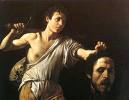
Goliath's Head

Goliath\
Caravaggio

MEMORIAL DAY by Lo Galluccio

I might have stood with my Mother

on Sparks Street cheering the veterans of America’s

just and unjust wars

march past,

weeping for my Dad who died

jaundiced in the infirmary of society

not on the opera bloodied battlefield.

Instead into the cold confines of

film spectacle to see young Scandinavians

wrestle with writing and go mad,

jumping into the cold cobalt sea

off Oslo piers--

Two days ago Caravaggio’s dead Madonna

in crimson cloak crossed my mind as a Reiki healer

pulled my ear lobes. The church rejected

her because she was so heavy and lifeless,

daring to lie there dead,

not asleep for ascension’s sake--

That day I left behind my watch and black wrist band.

Strange, he’d made me undress--

the badboy of the Renaissance who loved his sword

and put his head into Goliath’s -- eyes bulging

with crazed fury, held by David’s victorious angelic fist.

To be today, not to be seen, to swear allegiance

to something else.